The Spirit Home Nursing Care
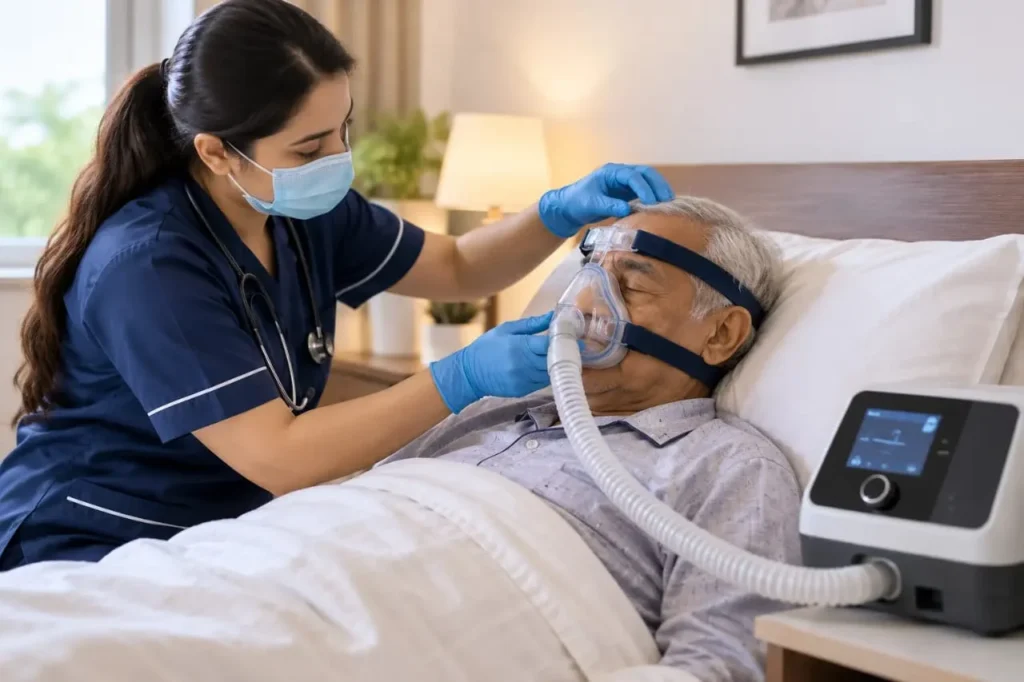
Breathing difficulties can affect your comfort, sleep, mobility, and overall quality of life. For people recovering from respiratory illness or managing long-term lung conditions, receiving professional respiratory therapy at home in Lahore can provide convenient and personalized support.
At home, patients may receive respiratory care in a familiar environment. Depending on the patient’s condition and healthcare provider’s recommendations, respiratory care may involve devices such as a nebulizer machine, BiPAP machine, incentive spirometer, and prescribed medications such as Ventolin nebules.
This guide explains common respiratory equipment, conditions, and home-care options that can support better breathing.
Respiratory therapy involves professional techniques and treatments designed to help patients manage breathing difficulties and improve respiratory function.
Home-based respiratory therapy can be particularly useful for:
Patients recovering from respiratory infections
Older adults requiring respiratory support
Patients with chronic lung conditions
Individuals who have difficulty traveling to a clinic
Patients who require respiratory equipment at home
People needing assistance with prescribed respiratory treatments
A qualified healthcare professional should assess the patient’s condition and determine which treatment or equipment is appropriate.
For families in Lahore, home respiratory care can make ongoing treatment more convenient. Instead of traveling to a healthcare facility for every session, certain respiratory-care services can be provided at home when clinically appropriate.
Professional home care may include:
Assistance with prescribed treatments
Monitoring of vital signs and respiratory status
Patient and family education
Guidance on the appropriate use of respiratory equipment
Support with prescribed respiratory-care routines
A BiPAP machine provides two different levels of positive airway pressure to support breathing. It may be prescribed for certain patients who experience breathing difficulties or require non-invasive ventilatory support.
A BiPAP machine should be used according to the instructions of a qualified healthcare professional. The appropriate pressure settings and mask type depend on the patient’s medical needs.
A nebulizer is a device that converts liquid medication into a fine mist that can be inhaled through a mask or mouthpiece.
Nebulizer treatment may be prescribed for patients who have difficulty using certain inhaler devices or who require medication in nebulized form.
A nebulizer machine typically consists of a compressor, medication chamber, tubing, and mouthpiece or mask.
When using a nebulizer machine at home, proper cleaning and maintenance are important. Patients should follow the manufacturer’s instructions and their healthcare provider’s recommendations.
The nebulizer price in Pakistan varies depending on the brand, model, features, and supplier. Basic models may be more affordable, while advanced or specialized machines can cost more.
Before purchasing a nebulizer machine, consider factors such as:
Machine quality
Noise level
Medication cup capacity
Ease of cleaning
Availability of replacement parts
Warranty and after-sales support
Choosing a device based only on price may not always be appropriate. The patient’s respiratory needs should be considered first.
Ventolin nebules contain salbutamol, a bronchodilator medication that may be prescribed to help relieve bronchospasm and breathing difficulties associated with certain respiratory conditions.
Ventolin nebules are commonly administered using a nebulizer when prescribed by a healthcare professional.
Patients should use the medication according to the prescribed dose and instructions. Do not start, stop, or change respiratory medication without medical advice.
An incentive spirometer is a handheld breathing device designed to encourage slow, deep breaths.
It may be recommended in certain situations, including after some surgical procedures or when a healthcare professional wants to encourage deep-breathing exercises.
Correct technique is important. A healthcare professional can demonstrate how to use an incentive spirometer properly and determine whether it is suitable for the patient.
Interstitial lung disease (ILD) refers to a group of conditions that can cause inflammation and/or scarring of the lung tissue.
People with interstitial lung disease may experience symptoms such as:
Shortness of breath
Persistent cough
Reduced exercise tolerance
Fatigue
Management depends on the specific type and severity of ILD. Some patients may benefit from pulmonary rehabilitation, breathing exercises, oxygen therapy, medication, or other treatments prescribed by their healthcare team.
Home respiratory support can help eligible patients follow their prescribed care plan while remaining in a familiar environment.
Treatment and respiratory-care routines can be adapted to the patient’s individual needs and healthcare plan.
Patients may feel more comfortable receiving appropriate care in their own surroundings.
Professional guidance can help family members understand respiratory equipment and prescribed treatment routines.
Healthcare professionals can demonstrate proper techniques for using respiratory devices and explain important safety and maintenance practices.
You should contact a healthcare professional if breathing problems are persistent, worsening, or interfering with daily activities.
Seek urgent medical attention for severe symptoms such as:
Severe difficulty breathing
Blue or gray lips or face
Severe chest pain
Confusion or loss of consciousness
Sudden and significant worsening of breathing
Home respiratory therapy should complement—not replace—appropriate medical diagnosis and treatment.
Respiratory care at home can be a practical option for patients who need ongoing support and have difficulty making frequent trips to a healthcare facility.
Professional home-based respiratory care can help eligible patients follow their prescribed respiratory-care plan while receiving support in a familiar environment.
For families looking for respiratory therapy at home in Lahore, professional support may provide greater convenience while helping patients and caregivers understand prescribed respiratory treatments and equipment.
A BiPAP machine provides two levels of positive airway pressure and may be prescribed for certain breathing conditions requiring non-invasive ventilatory support.
A nebulizer machine converts liquid medication into an inhalable mist that can be delivered through a mask or mouthpiece.
The nebulizer price in Pakistan depends on the brand, model, features, and supplier. It is best to compare specifications, reliability, and warranty support rather than choosing solely on price.
Ventolin contains a medicine that should be used according to a healthcare professional’s instructions. Do not start or change respiratory medication without appropriate medical advice.
An incentive spirometer encourages slow, deep breathing and may be recommended in certain clinical situations to support lung expansion.
Some patients with interstitial lung disease may receive aspects of their respiratory care at home, depending on their condition and treatment plan. Their healthcare provider should determine what care is appropriate.
Managing respiratory problems at home can be more convenient when patients have access to appropriate professional support and equipment. From BiPAP machines and nebulizer machines to Ventolin nebules and incentive spirometers, respiratory-care tools have specific purposes and should be used correctly.
If you are looking for respiratory therapy at home in Lahore, professional home-based care can help you follow your prescribed respiratory-care plan while receiving support in a familiar environment.
Subscribe now to receive expert health tips, service updates, and exclusive offers directly in your inbox.

Trusted home healthcare across Pakistan since 2012. We provide nursing care, elderly care, physiotherapy, diagnostics, and more with compassion and professionalism.
Copyright © 2025 Zuriel Digital Sol. All Rights Reserved.
WhatsApp us